Evolution of Village Postal Service: 1975 vs 2026
The journey of the village postal system from 1975 to 2026 reflects an extraordinary technological transformation in communication, logistics, and rural connectivity that has profoundly altered the everyday fabric of countryside living. Decades ago, rural life was intimately tied to the rhythmic, anticipated arrival of the local postman, whose bicycle tracks across dusty village paths and heavy leather satchel symbolized the sole tangible lifeline connecting isolated communities to the wider world. In sharp contrast, the year 2026 presents a hyper-connected rural landscape where traditional handwritten letters have largely given way to digital communication networks, automated postal sorting facilities, and advanced drone-assisted package delivery systems. This vast evolution has fundamentally reshaped how village residents conduct small-scale businesses, maintain vital family ties across great distances, and access essential government and financial services, successfully bridging the historical gap that once separated remote countryside locations from bustling metropolitan centers. To fully appreciate this transformation, one must examine the operational realities, psychological hurdles, and infrastructural limitations that defined rural correspondence in the mid-1970s, and weigh them directly against the speed, transparency, and high-tech convenience enjoyed by villagers in the current digital era. Through this comprehensive comparative lens, we can witness how modern logistical innovations have not only accelerated the delivery of physical goods and messages but have also served as a catalyst for profound economic empowerment, social inclusion, and digital literacy across agricultural and rural heartlands worldwide.
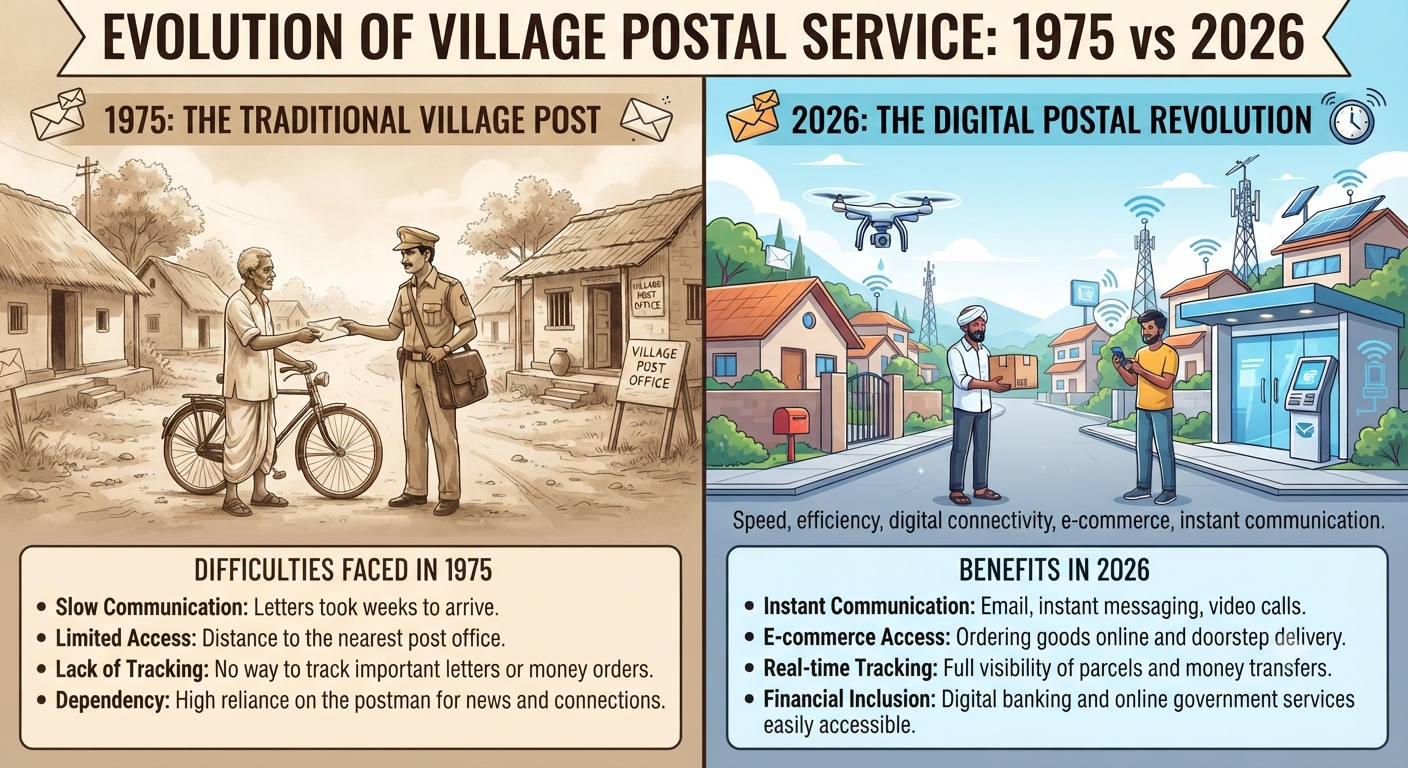
Reflecting closely on the village postal ecosystem of 1975 reveals a world defined by patience, physical hurdles, and a profound sense of geographical isolation that contemporary generations can scarcely imagine. Communication during this era was inherently slow, arduous, and vulnerable to every disruption in weather or local transport, as physical letters routinely took weeks to traverse regional sorting hubs, state boundaries, and remote rural delivery routes. Residents faced severe logistical limitations on a daily basis, often having to travel long distances on foot, bicycle, or local passenger vehicles just to reach the nearest rural post office to dispatch a telegram, receive a money order, or check for incoming correspondence. Furthermore, the complete lack of tracking mechanisms meant that critical legal documents, university applications, or vital family remittances could vanish completely without a trace once dropped into a mailbox, leaving both senders and receivers gripped by intense anxiety and prolonged uncertainty. Consequently, village communities relied heavily on the local postman not merely for the distribution of mail, but also as a primary, trusted conduit for news, village gossip, community notices, and external updates from relatives who had migrated to distant industrial cities for employment. This heavy reliance placed immense responsibility on postal workers who navigated harsh terrains and extreme weather conditions with minimal technical support, relying entirely on handwritten ledgers, physical stamps, and manual sorting cabinets to keep the fragile threads of rural communication alive against formidable odds.
Fast-forwarding to the year 2026, the modern digital postal revolution has systematically dismantled these historical barriers and replaced them with unprecedented speed, total transparency, and seamless integration. Today's villagers enjoy instant communication tools ranging from high-definition video calls and real-time messaging applications to high-speed electronic mail that crosses continents in mere milliseconds, rendering physical distance virtually obsolete for interpersonal connections. Simultaneously, the modernization of postal and logistics networks has unlocked robust e-commerce access for rural households, enabling residents to order agricultural inputs, consumer electronics, clothing, and daily household goods online with reliable, often automated doorstep delivery right to their farmhouses and village homes. Real-time parcel tracking provides complete, minute-by-minute visibility over every incoming shipment, commercial package, and electronic money transfer, entirely eliminating the guesswork, anxiety, and lost items of the past. Moreover, contemporary village post offices and localized service hubs function as advanced digital kiosks, offering comprehensive financial inclusion through electronic banking, instant digital micro-loans, online utility bill payments, and direct government subsidy disbursements that bypass bureaucratic red tape. This technological leap has also transformed the role of the modern postal worker from a weary traveler carrying heavy paper satchels into a tech-equipped logistics specialist and digital facilitator who assists elderly or less tech-savvy villagers in navigating online portals, government services, and digital wallets, ensuring that no segment of the rural population is left behind in the march of progress.
In conclusion, the remarkable transformation of the village postal and communication infrastructure over the past half-century stands as an enduring testament to human ingenuity, technological persistence, and visionary development. By systematically overcoming the grueling delivery delays, rigid physical access barriers, and frustrating tracking uncertainties that defined the rural experience in 1975, the advanced, multi-faceted networks of 2026 have successfully empowered rural populations with tools that foster sustained economic growth, enhanced educational opportunities, and deep social integration. This seamless blend of modern logistics, automated sorting, and ubiquitous digital connectivity ensures that no matter how geographically remote a village may be, it remains firmly plugged into the vibrant heartbeat of the global economy, significantly elevating the standard of living, financial security, and overall quality of life for every single household that calls the countryside home.